
A challenging and fast-paced world, still recovering from a global pandemic, has caused many students and teachers to feel unwell. Returning to being “human” in the classroom is the great challenge of the 21st century, with self-esteem, empathy and emotional regulation as our companions on this journey.
D’avui m’emporto saber que li importo a algú», em respon Isaac, de 12 anys, després de preguntar-li què s’emportava de l’excursió que acabava de realitzar amb els seus companys/as de classe. Un matí i tres dinàmiques; Lideratge amb el cavall, el Circuit de la Confiança i el Pont de la Comunicació Positiva van ser suficients per a la seva reflexió. Vaig sentir ràbia en escoltar-ho, de fet, les seves paraules van traspassar la meva pell fins a clavar-se com una fletxa en el cor. Vaig contenir les meves llàgrimes mentre la seva professora, impactada i fins i tot sanglotant, em confessava que per a ella els seus alumnes/as eren molt importants, però que era cert que mai els havia dit «ets important per a mi». Aquest dia em vaig preguntar: què estem fent?, què ens hem perdut perquè un xaval senti que no importa a ningú? Sis anys després puc afirmar que hi ha molts Isaacs en els nostres instituts.
Classrooms, those supposedly safe places designed to facilitate learning and the acquisition of the resources needed to navigate life with sufficient strength and confidence, are straying from their purpose, becoming spaces where education has been confused with filling heads with facts; where we are asked to leave our emotions at the classroom door in order to become perfect machines for memorising and solving mathematical problems, dehumanising children, young people and teachers.
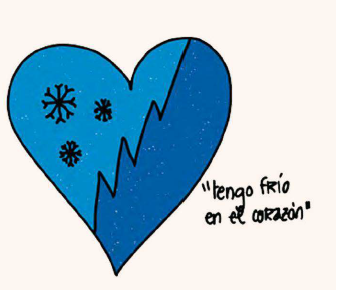
Gael, un petit de tan sols cinc anys, em va dir: «tinc fred en el cor». Crec que ell s’adonava del que nosaltres a penes apreciem i, és que, encara que el món faci mal i punxi, podem reduir i reparar el dolor de la vida, o amplificar-lo i deixar-nos arrossegar per ell. En realitat, tot és molt simple i per molta innovació pedagògica o fantàstiques metodologies que usem, la nostra manera de parlar, de tractar i de mirar és la que cada dia diu si som dels quals acaricien cors o dels quals els refreden. Tinguem clar que quan refredem, al cervell li costa més aprendre.
We all know that educating is a commitment to learning, but it is also a commitment to society and to the planet and, of course, to the boy or girl you have before you. Educate, etymologically, means ‘to draw out from within to without’, and, apart from worthy exceptions, life, circumstances or the educational laws of many countries have led us to do the exact opposite: to ‘fill’ from without to within, with no time to draw out the treasures hidden in these souls before us. I confess that when I listen to children and adolescents, I not only learn, but in a few seconds, I recover my humanity and hope, because they are the great sages of our time, not because we adults are no longer capable, but because the rush of the world prevents us from pausing and thinking about what we are really doing. Do we educate by transforming from the inside out, or do we settle for memorising to show what has been learnt on the surface?
The role of teachers and educators is not just to ‘fill in the blanks’; anyone can do that, even Google. We are much more than that and can go much further. In my opinion, my job is to awaken minds. In fact, I feel that we are the last bastion, the last stronghold where this can be done professionally.
 Catalan
  Spanish
  English