
La Granja© Method

"La Granja, Ability Training Center," the first farm-school with a registered Emotional Education Method and scientifically proven results.

La Granja© Method

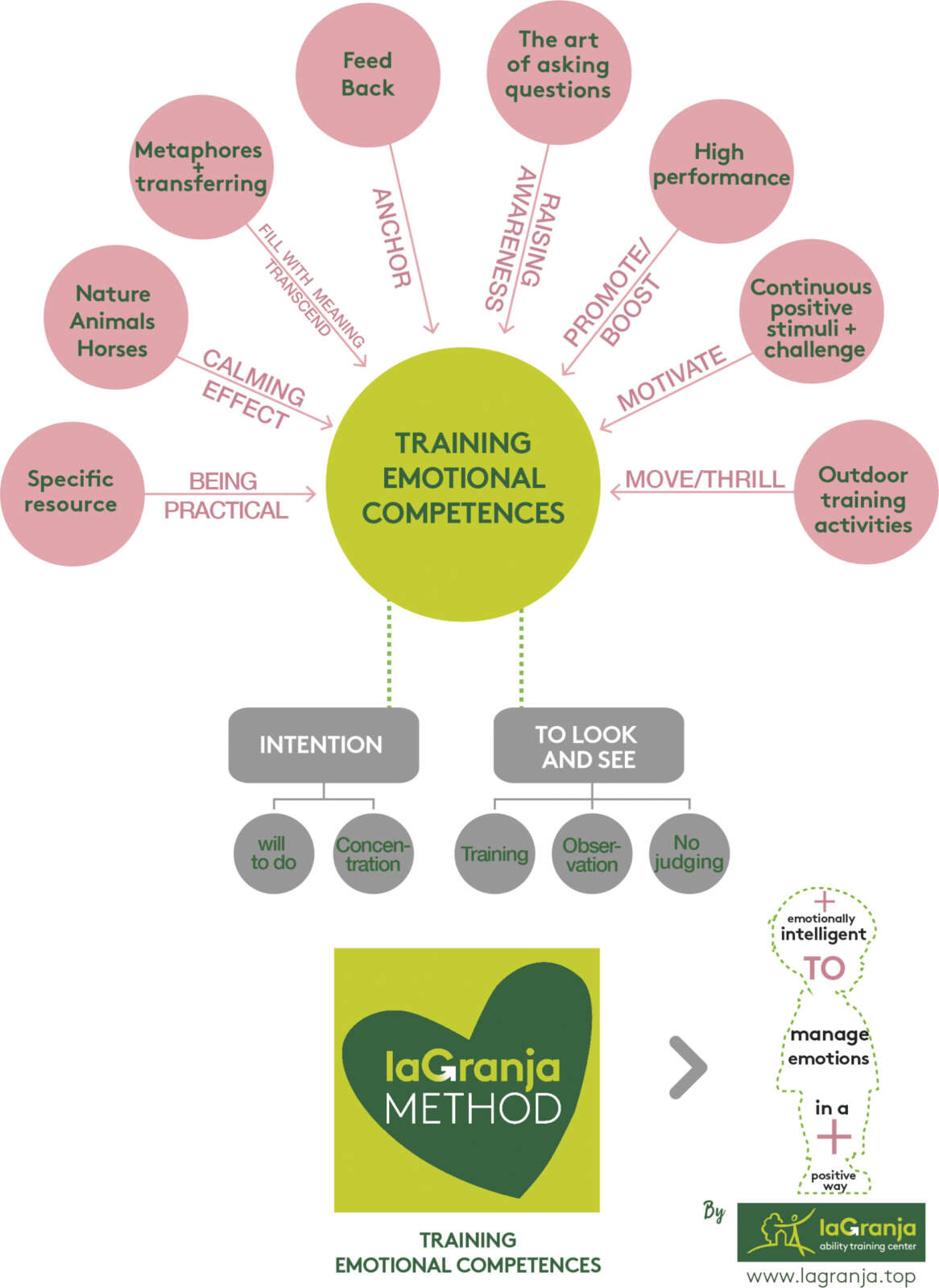
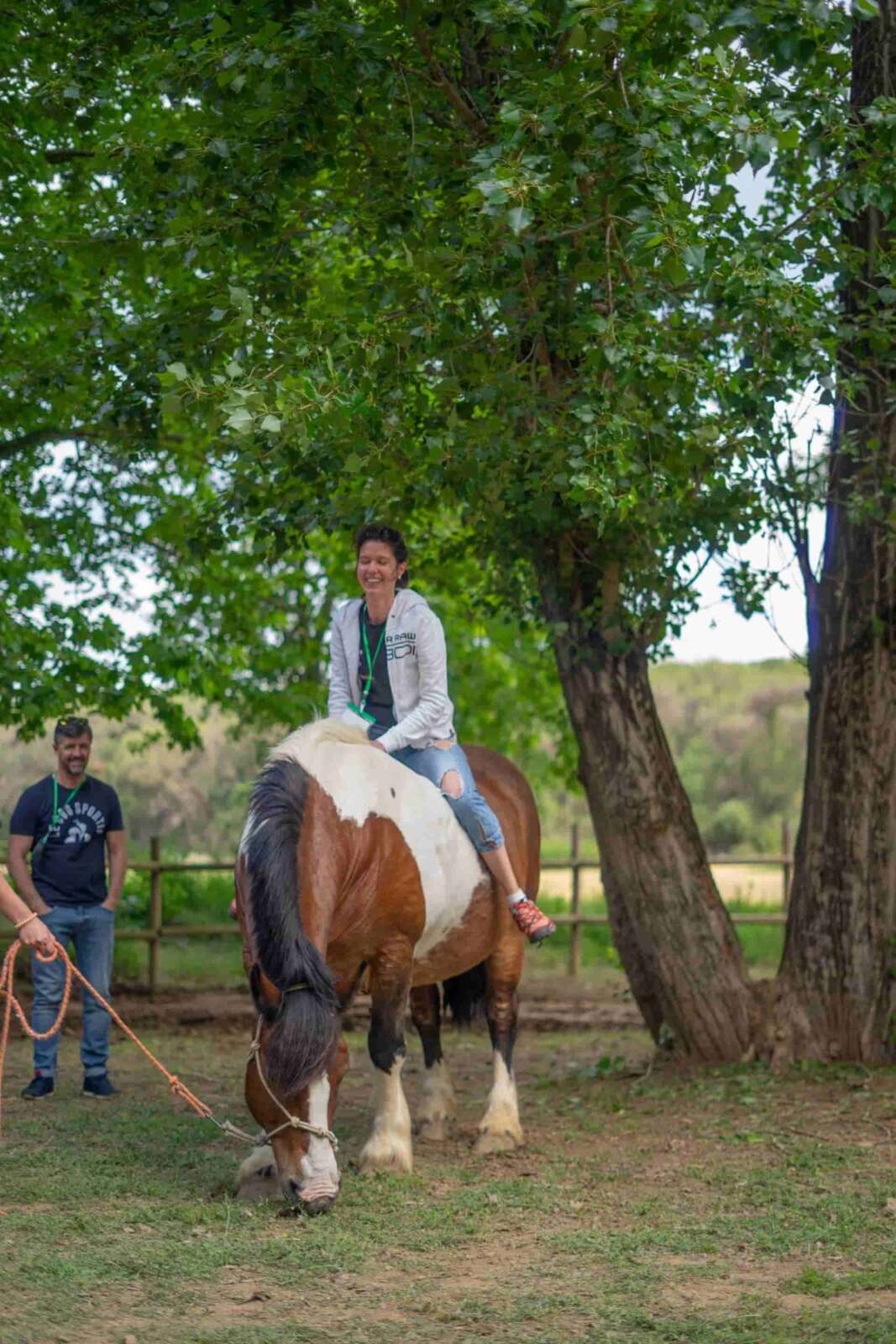
The La Granja Method© és una metodologia creada a “La Granja, Ability Training Center”, que es basa en la pràctica i l’entrenament de les competències emocionals de persones de totes les edats, amb resultats científicament demostrats* en el canvi de comportament i actitud. Creiem fermament que només es poden interioritzar els aprenentatges relacionats amb l’educació emocional quan aquests són vivencials i emocionen les persones. El La Granja© Method it has been implemented since 2005, with more than 20,000 participants annually, including children, young people and adults from different educational and professional backgrounds.

The La Granja Method© It is used in the Emotional Management programme (NF1) of the Sant Joan de Déu Hospital, in the emotional education programme of La Masia del Barça (2016-2017-2018), as well as in the Masia Solidària project (2019). We also use it with university students at the University of Barcelona, Blanquerna University and the International University, with schools such as SEK, La Salle, Dominicas and Escoles Pies, and with companies and organisations such as La Caixa, ICS, Barcelona City Council, Factor Humano, Danone and Ametller Origen. Translated with DeepL.com (free version)

The La Granja Method© ha estat presentat en diversos congressos científics, com AIDIPE i CINAIC a Madrid (2019), les XIV, XV i XVI Jornades d’Educació Emocional del GROP de la Universitat de Barcelona i el Congrés Anual de Neurofibromatosi (2019).

Scientific Publication of the La Granja Method©

El nostre estudi «Innovació en educació emocional en l’oci educatiu: el Mètode La Granja» publicat a la Revista de Investigación Educativa, 38(2), 495-513. DOI: http://dx.doi.org/10.6018/rie.405721. The authors are: Gutiérrez-Lestón, C., Pérez-Escoda, N., Reguant, M., and Eroles, M. (2020).

*Impact of the La Granja Method© in Emotional Colonies conducted by GROP, the research group in Pedagogical Guidance at the University of Barcelona (November 2017), with a sample of 132 children and young people. The quantitative and qualitative study demonstrates significant changes before and after in the 5 dimensions of emotional skills (awareness, regulation, autonomy, life skills, and well-being). Additionally, the study evaluates students' anxiety, showing a significant decrease in both state and trait anxiety levels.

Innovation in Emotional Education in Educational Leisure: The La Granja© Method

SJD 12-Week Intervention Results

SJD NF1 Camps Results

Development of Emotional Educators' Talent at La Granja, Ability Training Center

What do you take from these days?

«Per treballar com a equip ens hem d’escoltar, si no, no anirem enlloc. Més comunicació, més empatia.»

Óscar

«Possibilitat de parar i escoltar què pensen. Facilitar espais de comunicació (alineament emocional).»

Alfonso

«M’encantaria que tothom pogués fer aquest tipus d’activitats un parell de vegades a l’any. Molt enriquidor tant en l’àmbit personal com grupal.»

Elianne

«Connectar amb un mateix i amb els companys i companyes, poder nodrir-nos i reflexionar. Reinventar-se i redescobrir el poder del treball.»

Gabriela

«M’ha agradat molt poder compartir aquesta tarda amb l’equip i veure que tothom té un paper dins d’aquest. Personalment, he vist que he de confiar més en la gent que em rodeja i no preocupar-me si no tinc les coses sota control.»

Eva

«Quan algú necessita ajuda, el millor que es pot fer és ajudar. La confiança en l’equip és molt important.»

Felip Serra

Scientific Publication of the La Granja Method

Our study "Innovation in Emotional Education in Educational Leisure: The La Granja Method", published in the Revista de Investigación Educativa, 38(2), 495-513. DOI: http://dx.doi.org/10.6018/rie.405721. The authors are: Gutiérrez-Lestón, C., Pérez-Escoda, N., Reguant, M., and Eroles, M. (2020).

The result of the La Granja Method is reflected in the Impact Study of the La Granja Method©, conducted by the GROP (Group of Research in Pedagogical Orientation) of the University of Barcelona (November 2017), with a sample of 132 children aged 8 to 14. The quantitative and qualitative study shows significant changes before and after in the 5 dimensions of emotional competencies (awareness, regulation, autonomy, life competence, and well-being). Additionally, the study assessed the students' anxiety, showing a significant reduction in both state and trait anxiety after the camp sessions.

Quantitative Results:
Here is part of the quantitative scientific study conducted by GROP.

Evolution of Emotional Competencies According to CDE

After obtaining a (p > 0.05) in all variables in the Kolmogorov-Smirnov and Levene tests, the T-test for related samples was applied between the initial and final situation. As seen in Table 1, both in the total emotional competence and in its five dimensions: awareness, regulation, autonomy, social competencies, and life skills and well-being, the scores in the post-test phase, after participation in the summer camp, have increased.

Table 1. Evolution of Emotional Competencies Pre-Post (CDE) (Mean)

Media

DT.

t

Sig.

d COHEN

Pre-Total Comp.Emocional

6,73

6,73

6,73

6,73

6,73

Postest_Total

7,07

1,07

Pre-Consciència

7,46

1,36

-2,76

0,007

-0,18

Postest_Consciència

7,71

1,35

Pre-Regulació

5,69

1,43

-5,05

0,000

-0,40

Postest_Consciència

5,69

1,43

-5,05

0,000

-0,40

Pre-Autonomia

5,69

1,43

-5,05

0,000

-0,40

Postest_Autonomia

7,71

1,35

Pre-Compsoci

5,69

1,43

-5,05

0,000

-0,40

Postest_Compsoci

7,71

1,35

Pre-Cvida

5,69

1,43

-5,05

0,000

-0,40

Postest_Cvida

7,71

1,35

N=127

As we can observe, the difference in total emotional competence occurs with a significance level of 0.000 in favor of the final situation, so we can affirm that there are improvements between the before and after their time at La Granja.

When analyzing the progress in the different evaluated dimensions, it is observed that in all cases, except for life skills and well-being, the changes observed are statistically significant with a probability between p = 0.000 and p < 0.014, and also in favor of the final situation, indicating an improvement in the level of development of these competencies. In addition to the mean contrast, the magnitude of these changes has been calculated. To do so, Cohen’s d has been studied and is also presented in Table 1. Based on the results, very similar changes to those typically observed as a result of training processes (Rosenthal, 1996) are detected, with a magnitude of around 0.30 in total emotional competence, and in the dimensions of emotional regulation and autonomy.

Qualitative Study, Conducted by GROP at the University of Barcelona

Perception of the Learning Experience

As a result of the lexicometric analysis, the most frequently used terms after their experience at La Granja were: learn, do, and people, followed by other connections like a lot, know, trust, friend, and will be useful.

In the particular analysis of each of these nodes, interesting and significant connections were also observed. For example, terms like: know, listen, happy, happiness, express, and share were associated together. Another word chain, associated with the term “person,” includes: power, team, work, judge, on one hand, and opportunity, give, opinion, truth, on the other. All of these are highly proactive terms that are linked to the educational program at La Granja.

The central node is the word “learn,” surrounded by others like: emotion, fear, problem, need, value, control, face, and pass. All of these seem to refer to the inner world or personal control—areas that are intentionally worked on during the emotional camp activities at La Granja and represent a real need, though not always consciously felt or expressed during childhood and adolescence.

Another central node emerges around the term “people.” This word is primarily linked to “know,” as it often refers to meeting new people and making friends. The words that are immediately connected include: relate, easy, easily, talk, want, respect, live together, feel, and experience. Similarly, terms like life and important emerge, associated with empathy, world, experience, and adventure. The analogy between this community of terms and the experience lived at the emotional camp, with its contact with the forest, animals, and especially with others, in a way of relating that differs from what they typically experience, is noteworthy.

The third and final core is “do.” We believe this is once again linked to the experience of doing things autonomously and personally, which is confirmed by some of the immediate terms such as fun, joy, safe, I can, trust, self-esteem, or believe. Terms associated with thinking, feeling, or helping also appear, which seem to connect to a less active and more reflective way of doing.

The quantitative results observed confirm that emotional competence has indeed improved, particularly in regulation (d = 0.40) and emotional autonomy (d = 0.30), followed by social competence (d = 0.18).

Les dades qualitatives també apunten en aquesta direcció, destacant, en aquesta ocasió, un major nombre de comentaris referits a la competència social, seguits d’aquells que fan referència a aprenentatges relacionats amb la regulació i amb el desenvolupament de la seva autonomia emocional.

How can we explain how we do it?

A picture is worth a thousand words. With these videos, we save you from a long read and give you a clear idea.

And if it’s still not clear... Give us a call and we’ll explain it!

Play Video
Play Video
Play Video

Congresses where the "La Granja Method©" has been presented.

"UNESCO 2022", "World Conference on Higher Education". Barcelona.
Participation with the poster "Emotional and Social Skills Training in Children with Neurofibromatosis Type 1" at the 2020 International Neurofibromatosis Medical Congress, in collaboration with Sant Joan de Déu Hospital in Barcelona and La Granja Ability Training Center.
"CINAIC, V International Congress on Learning, Innovation, and Cooperation". Presentation of the work "An Emotional Education Experience at La Granja School's Urban Summer Camp: An Innovation in the Educational Leisure Field". (Madrid, 2019). You can watch the PRESENTATION VIDEO HERE
“AIDIPE 2019, XIX International Congress of Educational Research”. Workshop presentation “Educating Emotions from the Classroom to Transform the World” (Madrid, 2019).
2019 Annual Neurofibromatosis Congress, presenting the results of the studies from the project carried out in collaboration with the Hospital Sant Joan de Déu of Barcelona. Conference: “How to Develop Emotional Competencies in Children and Adolescents Affected by NF1?” (results from BRIEF, CDE, and ADHD).

"XV Emotional Education Conference 2019." Training the Educator in Emotional Education. University of Barcelona/ICE. Workshop: "Training in Emotional Educator Stages. The La Granja Experience."

"XIV Emotional Education Conferences, 2014, 2015, 2016, 2017. University of Barcelona/ICE." Presentation: "An Emotional Education Experience at the La Granja Summer Camp: An Innovation in the Field of Educational Leisure." And the Workshop: "Emotional Education: From Educational Leisure to the Classroom." (Barcelona 2018). III, IV, V, and VI Henry Dunant Congress. Caixa Fórum.

Discover our activities

Competency Accelerator Program

Competency Accelerator Program

Team Building

Team Building

Family Day

Family Day

Subscribe to our Newsletter

La Granja